
Keynote Speaker
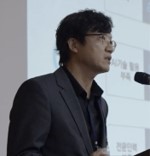
Jaehong Lee
Professor,Sejong University, Department of Architectural Engineering, Seoul, Korea
Founding Director: Deep Learning Architecture Research Center
Fellow: Korean Academy of Science and Technology; Asia-Pacific Artificial Intelligence Association
Speech Title: Artificial Intelligence in Structural Engineering: From Physics-Informed Learning to Agentic Design Automation
Abstract: Artificial intelligence is rapidly reshaping structural engineering by connecting mechanics-based analysis, data-driven learning, and automated design workflows. This keynote presents a coherent pathway from physics-informed learning to agentic design automation, with emphasis on how AI can support reliable structural analysis, digital-twin-based assessment, and engineering decision making. Rather than treating AI as a black-box replacement for conventional simulation, the lecture frames AI as a mechanism for embedding equilibrium, compatibility, constitutive behavior, boundary conditions, and design constraints directly into computational models.
1) Physics-informed learning provides a data-efficient framework for structural analysis by combining first-principles mechanics with neural-network approximation. Applications include surrogate modeling of finite-element responses, inverse identification from sparse measurements, uncertainty-aware prediction, and scalable parametric analysis for complex structural systems.
2) AI-enabled structural engineering extends these models to structural health monitoring and digital twins. Sensor data, inspection images, numerical simulations, and engineering knowledge can be integrated to diagnose damage, estimate structural performance, and update analytical models across the life cycle of buildings and infrastructure.
3) Agentic design automation represents the next stage, where large language models, optimization algorithms, finite-element solvers, design codes, and domain-specific databases cooperate as verifiable engineering agents. These systems can generate design alternatives, execute analysis tasks, check code compliance, prepare reports, and support iterative decision making under human supervision. The keynote concludes by discussing the requirements for trustworthy implementation, including traceability, validation, explainability, and clear responsibility between AI systems and structural engineers.
Biography: Jaehong Lee is Professor of Architectural Engineering at Sejong University, Seoul, Korea, where he has served since 1998. He received his Ph.D. in Engineering Mechanics from Virginia Tech in 1992, his M.S. in Architectural Structures from Yonsei University in 1988, and his B.S. in Architectural Engineering from Yonsei University in 1986. His research interests include computational mechanics, AI applications to structural engineering, physics-informed neural networks, digital twins, and structural optimization. He is the Founding Director of the Deep Learning Architecture Research Center and has provided national R&D leadership in academia-industry collaboration for AI-driven structural engineering. He has published more than 300 SCI-indexed journal papers, with more than 12,000 citations and an h-index of 62. His honors include the Presidential Young Scientist Award and the Minister of Science and ICT Award. He is a Fellow of the Korean Academy of Science and Technology and a Fellow of the Asia-Pacific Artificial Intelligence Association. He has also served as President of the Korean Association for Spatial Structures, Vice President for International Affairs at Sejong University, and Dean of the College of Engineering at Sejong University. His editorial service includes Editorial Board Member of Engineering Structures and Advances in Engineering Software, and Guest Editor of Computers & Structures.